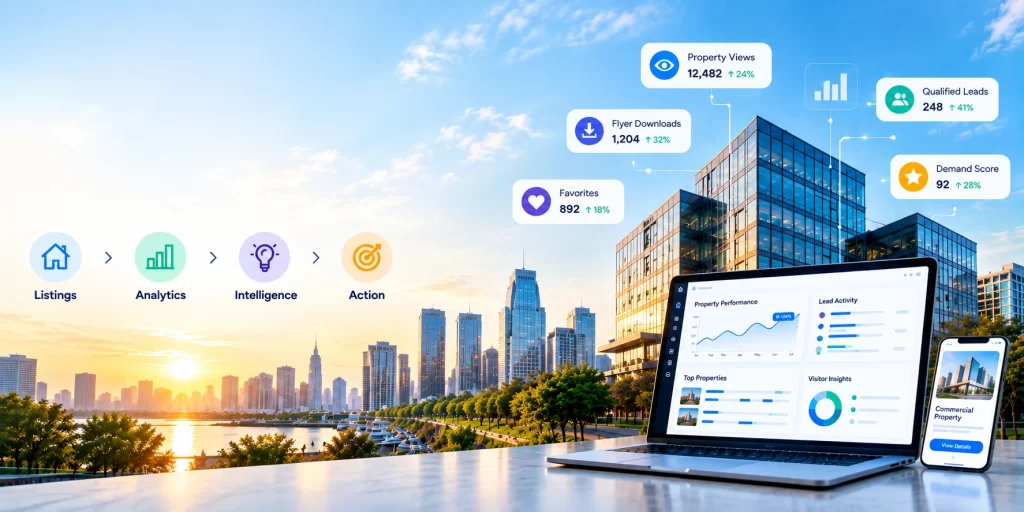
From Property Listings to Property Intelligence: The Next Step for Commercial Real Estate
A commercial real estate listing tells you what a property is—location, price, size, photos, broker contacts. But it rarely tells you what people are actually doing with that listing, or which interactions signal real buying or leasing intent. The next wave of CRE technology isn’t another listing site; it’s an intelligence layer that turns visitor behavior and property engagement into actionable signals for brokers, owners, and marketplaces.
Why Listings Alone Aren’t Enough
Traditional portals capture static attributes: property type, square footage, zoning, images, and contact details. What they miss is behavioral context: how many unique visitors viewed the page, how many returned, who downloaded the flyer, which properties are being compared, and which marketing channels drive serious inquiries. Without this, every lead looks the same—“one inquiry received”—even though intent can vary dramatically.
The Intelligence Layer: What It Measures
An intelligence layer sits on top of existing platforms (React apps, WordPress sites, mobile apps, custom portals) via APIs, JavaScript/React SDKs, and webhooks. It captures events such as:
- Property views, unique and returning visitors, sessions
- Favorites, shares, comparisons, search activity
- Flyer views and downloads, virtual-tour interactions
- Phone/email clicks, contact-form submissions, schedule requests
- Broker profile views and repeated engagement patterns
The value isn’t event collection; it’s aggregation into meaningful signals that explain demand and intent.
From Analytics to Lead Intelligence
Consider two visitors:
- Visitor A: One 20‑second view, no action.
- Visitor B: Five property views, three return visits, two flyer downloads, a favorite, a phone click, and an inquiry.
Both are “website visitors,” but their intent is not equal. Lead scoring translates behavior into priority. A simple configurable model might assign:
- Property view → +5
- Repeat visit → +5
- Flyer download → +10
- Favorite → +10
- Phone click → +15
- Inquiry → +20
- Schedule request → +25
Scores help sales teams answer a practical question: “Who should I follow up with first?” Platforms like Salesforce Einstein, HubSpot Predictive Lead Scoring, Buildout CRM, and RealNex already apply similar logic in CRE workflows.
Property Demand Signals
Lead intelligence is only half the story. Properties themselves generate demand signals. With hundreds of active listings, brokers need to see:
- Top viewed and fastest‑growing properties
- Most downloaded flyers and most favorited listings
- Properties with high engagement but low conversion
- Listings gaining attention over the last 7 days
This shifts dashboards from generic site stats to property‑level demand intelligence.
Property Demand Score
A Property Demand Score can combine signals such as unique visitors, repeat visitors, view velocity, favorites, shares, flyer downloads, inquiries, qualified leads, conversion rate, and recent activity. The score itself isn’t the insight; the explanation is. Transparency – showing why a score is high or low—makes it actionable for brokers deciding where to focus marketing or pricing adjustments.
Privacy and Identity: Doing This Responsibly
Behavioral analytics can identify returning browsers or devices using pseudonymous IDs, but that doesn’t equal knowing a person’s real identity. Responsible systems only attach names when there’s a legitimate identity signal: login, contact form submission, account creation, CRM record, authenticated interaction, customer‑provided information, or lawfully obtained enrichment. Privacy must be architected in from day one; intelligence shouldn’t become a pretext for indiscriminate personal data collection.
Reference Architecture (API‑First, Event‑Driven)
A practical, scalable design looks like this:
- Front end (React/website/mobile) → Tracking SDK
- API Gateway → AWS Lambda → Amazon SQS
- Event Processing → DynamoDB + EventBridge + S3
- Analytics & Intelligence → Dashboard/CRM/Webhooks
This serverless, event‑driven flow processes large volumes of interactions asynchronously so user experiences aren’t blocked by analytics work. For documents and flyers, private S3 storage with short‑lived, controlled download access lets you record who requested which document, for which property, from which session/source – while keeping files protected.
Where AI Fits (After the Data Is Solid)
AI should not replace accurate event capture, reliable aggregation, or meaningful signal creation. Once those layers exist, AI can act as a “digital analyst” for the brokerage:
- Which properties are gaining momentum this week?
- Which leads should the broker prioritize today?
- Which marketing channel is generating the highest‑quality leads?
- Why has engagement dropped for this property?
- Which properties are most similar to what this visitor has been researching?
- Which properties are likely to see increased demand next week?
This moves teams from “We have 10,000 visitors” to “These 37 visitors repeatedly engaged with our industrial assets; 12 downloaded brochures; 6 submitted inquiries; 4 show high purchase/lease intent.”
Building It as Infrastructure, Not a Walled Garden
The bigger opportunity isn’t another listing portal; it’s an API‑first intelligence layer that plugs into existing marketplaces, broker sites, and SaaS tools. Customers should be able to connect:
- Their website or mobile app → API/SDK → Tracking & Intelligence → Their dashboard/CRM
That opens the door for brokers, property owners, marketplaces, SaaS companies, and enterprise CRE platforms to share the same intelligence infrastructure without rebuilding from scratch.
The Direction of CRE Tech
Commercial real estate has enormous data, but having data and understanding it are different challenges. The trajectory is clear:
- Listings → Analytics → Intelligence → Action
A property listing tells you what the property is. Analytics tells you what visitors did. Lead intelligence tells you who shows meaningful intent. Property intelligence tells you which assets are gaining attention. AI, layered on top, helps explain what it all means and what to do next.
If you’re evaluating or building this layer, focus on four things: accurate event capture, privacy‑by‑design identity handling, transparent scoring and demand signals, and an API‑first architecture that integrates with the tools brokers already use.